
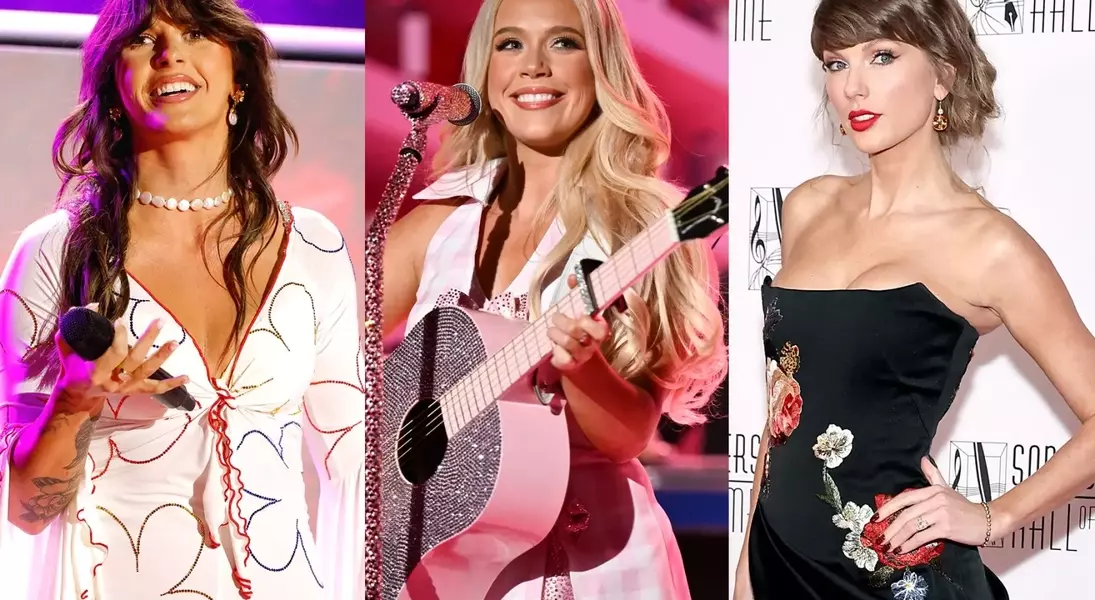
With Grammy nominations just around the corner, scheduled for November 16, the anticipation for the Best Country Song category at the 2027 Grammy Awards is palpable. The music industry is buzzing, especially with the phenomenal success of Ella Langley's "Choosin' Texas," a track that has not only broken records but also sparked extensive discussions and debates across the cultural landscape. While the song is a strong frontrunner, experts suggest that the competition is fierce, with several other deserving artists vying for the coveted award. This year's selection presents a compelling clash between mainstream popularity and critical artistic merit.
The debate over who will ultimately take home the Grammy for Best Country Song is multifaceted, balancing the overwhelming public reception of hits like "Choosin' Texas" with the Academy's occasional preference for critically acclaimed, yet less commercially dominant, compositions. Industry insiders emphasize the importance of voters thoroughly evaluating all nominated works. Beyond the obvious favorite, there's a strong field of contenders whose artistry and impact on the country music genre are equally noteworthy. The outcome will reveal whether the Academy prioritizes a song's widespread cultural resonance or its nuanced artistic achievement.
The Frontrunner: "Choosin' Texas" and Its Impact
Ella Langley's "Choosin' Texas" has undeniably captured the zeitgeist, achieving unprecedented levels of cultural penetration for a country song in recent memory. Its widespread popularity, evident in record-breaking achievements and continuous discussions, positions it as a formidable contender for a Grammy win. The song's success highlights a refreshing blend of traditional country sounds with contemporary appeal, resonating with a broad audience. Its organic, twangy charm stands out in a music world increasingly reliant on polished, often AI-assisted, production, making it a difficult entry for Grammy voters to overlook.
The pervasive presence of "Choosin' Texas" in popular culture makes a Grammy victory seem almost inevitable for Ella Langley. This track’s unique ability to merge classic country aesthetics with widespread appeal is a rare feat, demonstrating its powerful resonance. Co-produced by Langley and Miranda Lambert, the song boasts beautiful production, relatable narratives, and undeniable staying power. Its potential win would not only recognize the song’s individual artistic merit but also its significant contribution to the country music genre's evolution this year. However, some observers question whether the Academy, which sometimes favors critical acclaim over sheer popularity, will truly embrace this cultural phenomenon or seek out a different, perhaps less mainstream, winner.
Diverse Contenders and the Academy's Deliberation
While Ella Langley's hit is a strong favorite, the 2027 Grammys present a remarkably robust field of country music contenders, urging voters to look beyond the most obvious choice. Artists like Megan Moroney, with her poignant "Beautiful Things," and Kelsea Ballerini, offering an introspective look at success in "I Sit in Parks," represent equally compelling, and arguably critically acclaimed, alternatives. The Academy faces a decision between recognizing a song's monumental cultural impact and honoring works that showcase profound artistic achievement, irrespective of their commercial dominance. This underscores the nuanced and often challenging process of Grammy selection.
The country music landscape has been exceptionally vibrant this year, extending well beyond the immediate success of "Choosin' Texas." Voters are encouraged to explore the depth of talent, including potential nominees such as Midland's "Marlboro Man," Carter Faith's "Six String," Ashley McBryde's "Bottle Tells Me So," and the prolific Charley Crockett. Even established stars like Luke Combs could see nominations for an album, rather than a single track. Taylor Swift's successful return to her country roots with "I Knew It, I Knew You" also adds a significant dimension to the competition. For those willing to delve deeper, Ashley Monroe's raw and emotionally charged "I Hate Nashville" stands out as a critically acclaimed, albeit less mainstream, choice, representing the powerful storytelling that defines the genre at its best.