
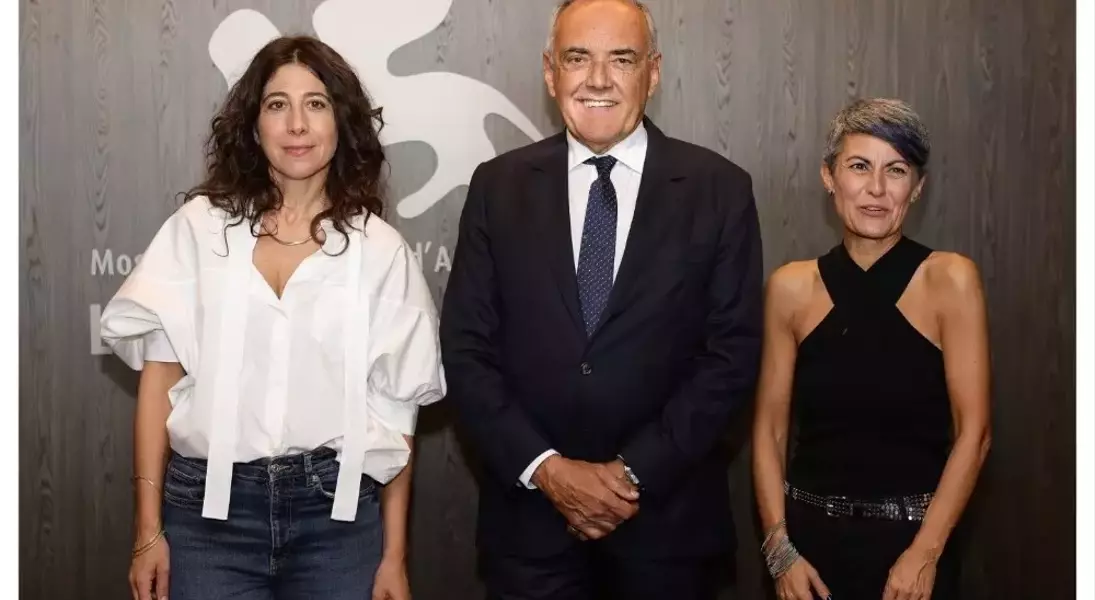
The recent lineup announcement for the esteemed Venice Film Festival has ignited a fierce debate within the global cinema community. Critics argue that the festival’s competitive selection this year demonstrates a significant underrepresentation of films helmed by women, prompting a re-evaluation of the standards and perspectives shaping major cinematic events.
Venice Film Festival Leadership Under Fire for Gender Imbalance in Official Selection
On July 27, 2026, the artistic director of the Venice Film Festival, Alberto Barbera, found himself at the center of a swirling controversy. Several prominent Italian film organizations, notably “Women in Film Television and Media Italia,” voiced strong disapproval regarding the glaring scarcity of female-directed films in the festival’s main competition. This year’s selection includes merely a single film by a woman among the 20 entries vying for the prestigious Golden Lion award.
Adding fuel to the fire, these organizations pointed out that the Italian contingent within the festival’s official and non-competitive categories is exclusively male, featuring seven male directors. In a forceful statement published in the Italian newspaper La Repubblica, critics labeled this a “one-dimensional selection,” emphasizing the lack of diverse perspectives. They argued passionately that the concept of “quality” in cinema is not an immutable, objective standard but rather a dynamic and culturally influenced construct. Their appeal underscored that artistic merit is intertwined with lived experiences, and any selection process must constantly question its inherent biases to truly reflect contemporary understanding.
The current figures represent a significant decline compared to the previous year, when approximately 29% of the competitive films (6 out of 21) were directed by women. While the “Venice Horizons” section, dedicated to emerging and experimental works, fares better with 8 out of 19 films (roughly 42%) directed by women, this section operates with different criteria and visibility.
In response to the growing outcry, Mr. Barbera defended the festival’s decisions in an interview with Variety, asserting that the festival could not be accused of gender bias. He cited past successes, noting that since 2000, Venice has awarded top honors to more female directors than other major festivals like Cannes and Berlin. He highlighted recent Golden Lion recipients such as Chloé Zhao (2020), Audrey Diwan (2021), and Laura Poitras (2022), and last year’s Silver Lion Grand Jury Prize winner, Italian director Maura Delpero. Barbera also pointed out that all three presidents of this year’s main juries are women: Maggie Gyllenhaal for the main competition, Valérie Donzelli for the Horizons jury, and Carolina Cavalli for the debut film award.
Barbera attributed the gender disparity to a lower submission rate and perceived “lower quality” of female-directed films this year. He stated that only 24% of fiction films submitted were by women, a decrease from 30% the previous year. He firmly rejected the idea of selecting films based on a gender quota, calling it “humiliating for women” and asserting that quality remains the sole criterion. However, critics argue that such justifications fail to address the systemic issues that may lead to fewer “qualifying” films by women in the first place, or how “quality” itself is defined within a male-dominated industry. Meanwhile, the independently curated “Venice Days” sidebar, led by artistic director Gaia Furrer, stands in stark contrast with 14 female-directed films out of 25 in its primary selection, opening with Lili Horvát’s “My Notes on Mars.” The “Critics’ Week” also features two female directors among its seven competitive features.
As the Venice Film Festival approaches its opening on September 2, the debate surrounding the representation of female filmmakers is set to be a significant topic of discussion, prompting broader questions about inclusivity and equitable opportunities within the film industry.
The ongoing dialogue at the Venice Film Festival serves as a critical reminder of the persistent challenges faced by female filmmakers in gaining equitable recognition. This controversy extends beyond individual film selections, urging a deeper examination of how cinematic “quality” is assessed and if existing frameworks inadvertently perpetuate a narrow, male-centric view. It’s a call to action for the industry to actively dismantle systemic barriers, foster diverse storytelling, and champion a more inclusive artistic landscape that truly reflects the multifaceted talents of all creators.